
Orgestra
Organoid technologies for disease modelling, drug discovery and development for rare diseases.




About the Orgestra project
We are an EU funded MSCA Joint Doctoral network that will train thirteen doctoral candidates in developing personalized disease models using stem cell-derived organoids for rare diseases, including the lung and kidney diseases, cystic fibrosis and cystinosis.
Research will aim to identify pathogenetic mechanisms, druggable targets, and drug mode of action for effective and innovative treatment strategies and to classify the pathway to clinic. We will also address ethical and regulatory issues to foster acceptance and implementation of organoid models and develop a living technologies toolset to enable a swift transfer from bench to bedside.
ORGESTRA is a four-year project funded by the EC HORIZON–MSCA-2023-DN-JD Grant Agreement No 101120108, coordinated by the University of Utrecht. The project starts 1st January 2024 and will end in December 2027.
The network is made up of fourteen partners from seven European countries providing international, intersectoral and interdisciplinary training that brings together molecular biologists, engineers, pharmacologists, clinicians, epidemiologists and ethicists, to give each of our doctoral candidates a unique, joint-doctoral training experience complemented by a rich network training programme.
Meet our Doctoral Candidates
Find out more about their research
The 7 strings of ORGESTRA videos
Our network partners are
Associate Partners undertaking training/secondments or degree awarding include:
Latest news
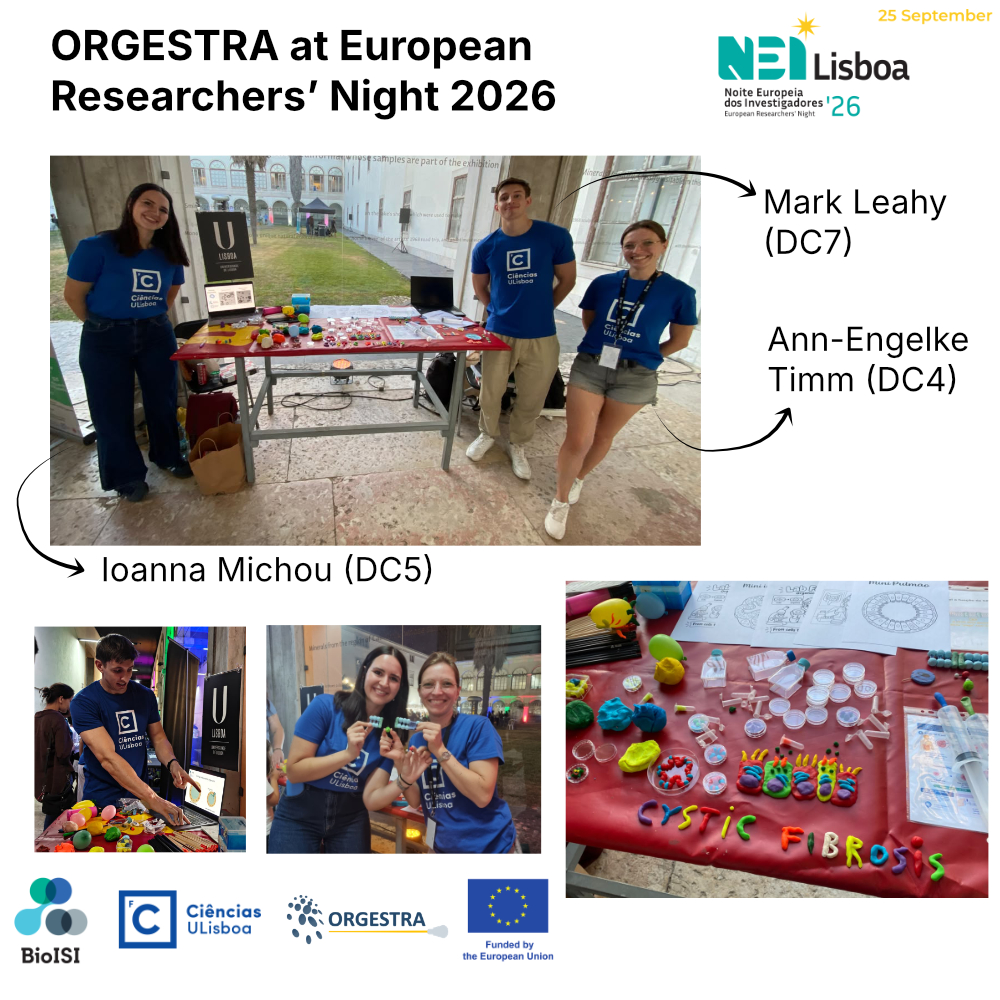
European Researchers Night Lisbon
Three ORGESTRA Doctoral Candidates – Mark Leahy, Ann-Engelke Timm and Ioanna Michou – took part in European Researchers’ Night in Lisbon, joining researchers from the BioISI Cystic Fibrosis Research Lab to bring biomedical research to the public....
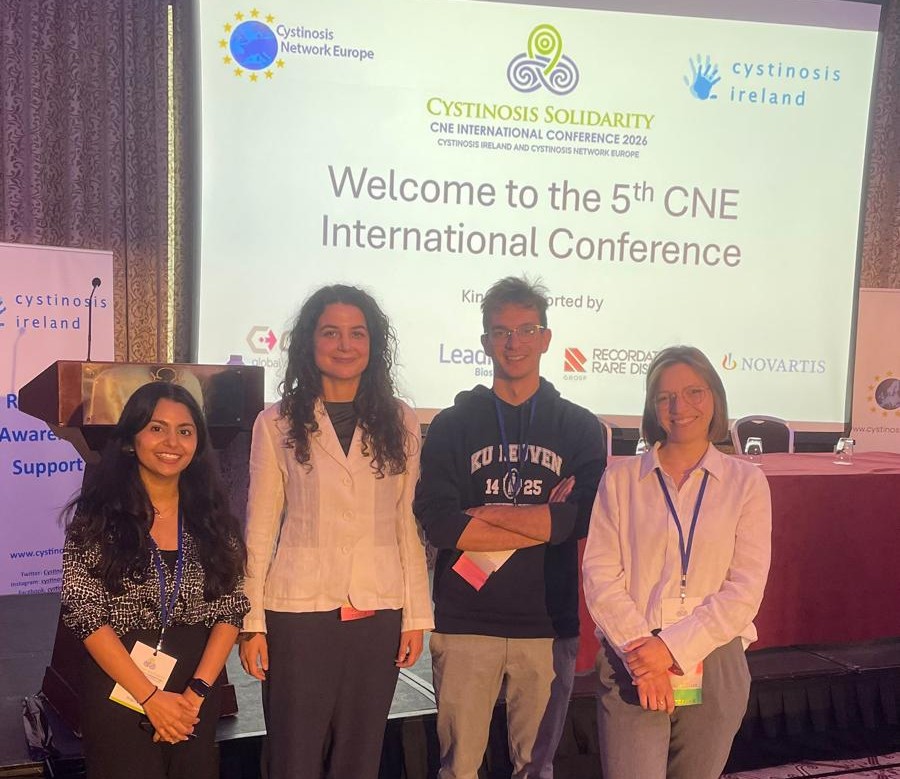
More awards for ORGESTRA DCs
This month, four of our DCs attended the Cystinosis Network Europe international conference in Ireland. DC4 Ann-Engelke and DC10 Lena presented updates from ORGESTRA and all DCs made presentations about their projects and presented posters. DC9 Roger DC10 Lena...